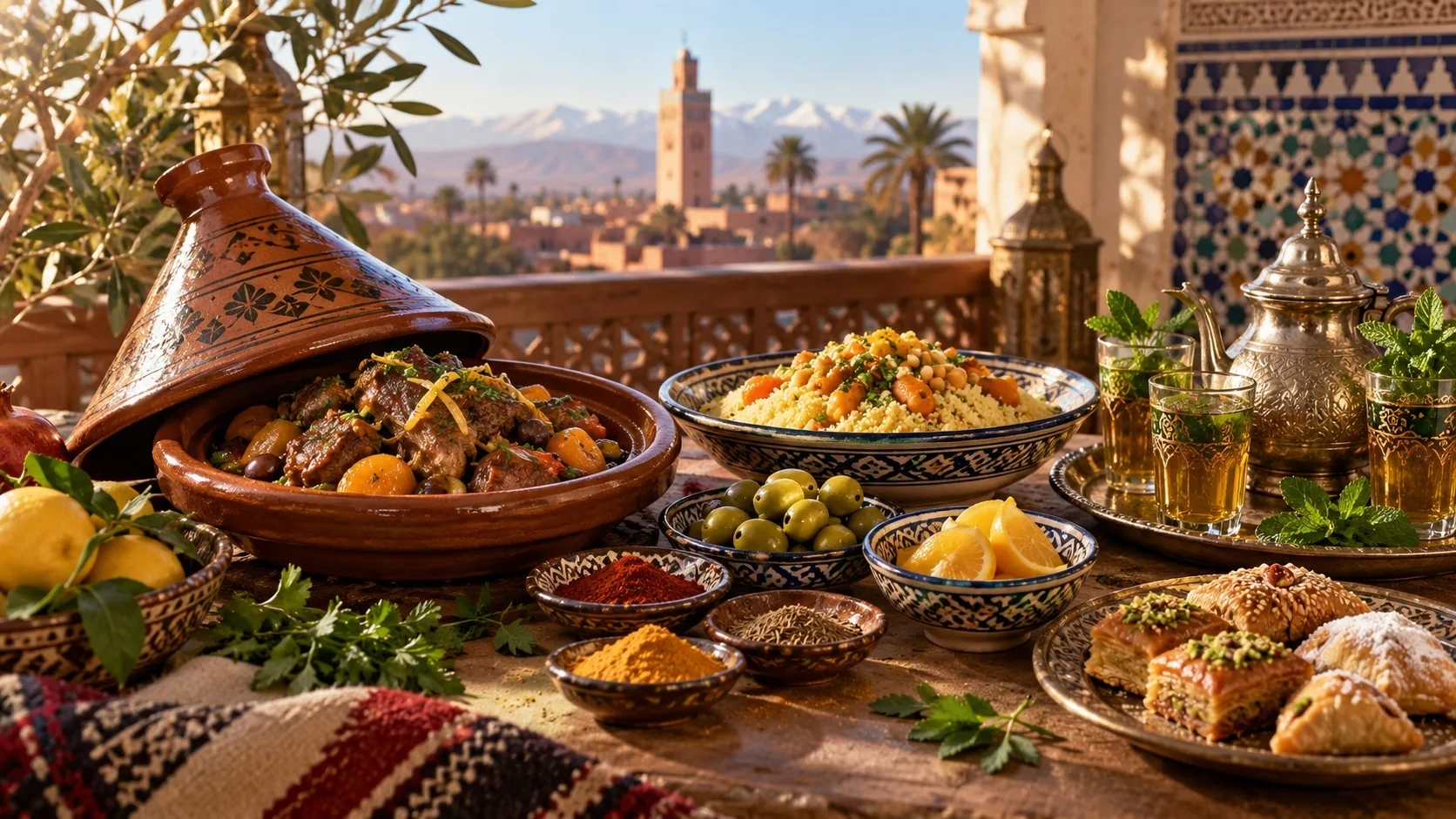
Moroccan cuisine is often described through its most recognizable dishes: couscous, tagine, pastilla, harira, mint tea, pastries rich with almonds and orange blossom.
But what makes Moroccan cuisine unique is not any one dish.
It is the way flavors are balanced, ingredients are treated, meals are shared, and cooking is connected to memory, place and hospitality.
Moroccan food has a distinctive ability to feel both generous and precise.
A dish may be deeply comforting, but it is rarely careless. Sweetness, acidity, spice, texture and aroma are usually working together. Preserved lemon can brighten a slow-cooked chicken tagine. Dried fruit can bring sweetness to lamb without turning the dish into dessert. Cinnamon may appear in a savory preparation. Almonds add richness and crunch. Fresh herbs lift slow-cooked dishes just before they reach the table.
The result is food with layers.
Not necessarily hot.
Not necessarily heavy.
But almost always balanced.
Spice is about harmony, not heat
One of the biggest misunderstandings about Moroccan cooking is the idea that it is simply “spicy.”
Moroccan cuisine uses spices generously, but heat is rarely the main goal.
Cumin, ginger, turmeric, paprika, black pepper, cinnamon, saffron and coriander may appear together, but each has a role. Some bring warmth. Others add sweetness, earthiness, fragrance or depth.
A good Moroccan dish does not taste like one spice.
It tastes like the ingredients have had time to become part of one another.
That patience matters.
Many Moroccan dishes develop slowly. Onions soften. Spices bloom. Meat becomes tender. Sauces reduce. Couscous is steamed rather than simply boiled. Doughs rest. Almonds are peeled, toasted, ground or shaped by hand.
The process is part of the flavor.
Sweet and savory belong at the same table
Another distinctive feature of Moroccan cuisine is its comfort with contrast.
Sweet and savory are not treated as opposites.
They often belong together.
A tagine may combine meat with prunes, apricots, dates or honey. Cinnamon may sit beside black pepper. A pastilla can be crisp, savory, fragrant and lightly sweet at the same time.
That balance can surprise people experiencing Moroccan food for the first time, but it is one of the cuisine’s great strengths.
The contrast is not there for novelty.
It creates depth.
The ingredient still matters
Moroccan cooking can be complex, but it does not hide poor ingredients.
The quality of the base matters.
A ripe tomato tastes different. Fresh herbs matter. Good olive oil matters. A preserved lemon should bring both acidity and fragrance. Almonds should taste like almonds.
That attention begins before the cooking starts.
In many Moroccan homes, selecting ingredients is part of the craft itself. You learn to judge vegetables, fruit, herbs, meat and spices with your eyes, hands and nose.
The recipe begins at the market.
There is no single Moroccan cuisine
Moroccan cuisine is also unique because of its regional diversity.
The food of the north is not exactly the food of the south. Coastal cooking differs from inland cooking. Mountain regions, agricultural plains and Saharan areas each developed around different ingredients, climates and histories.
Even the same dish changes from one family to another.
There is no single couscous.
No single tagine.
No single way to make harira.
Recipes are shaped by region, season, occasion and family memory.
That means Moroccan cuisine is both recognizable and endlessly varied.
You may know a dish by its name, yet discover a completely different version of it at another table.


