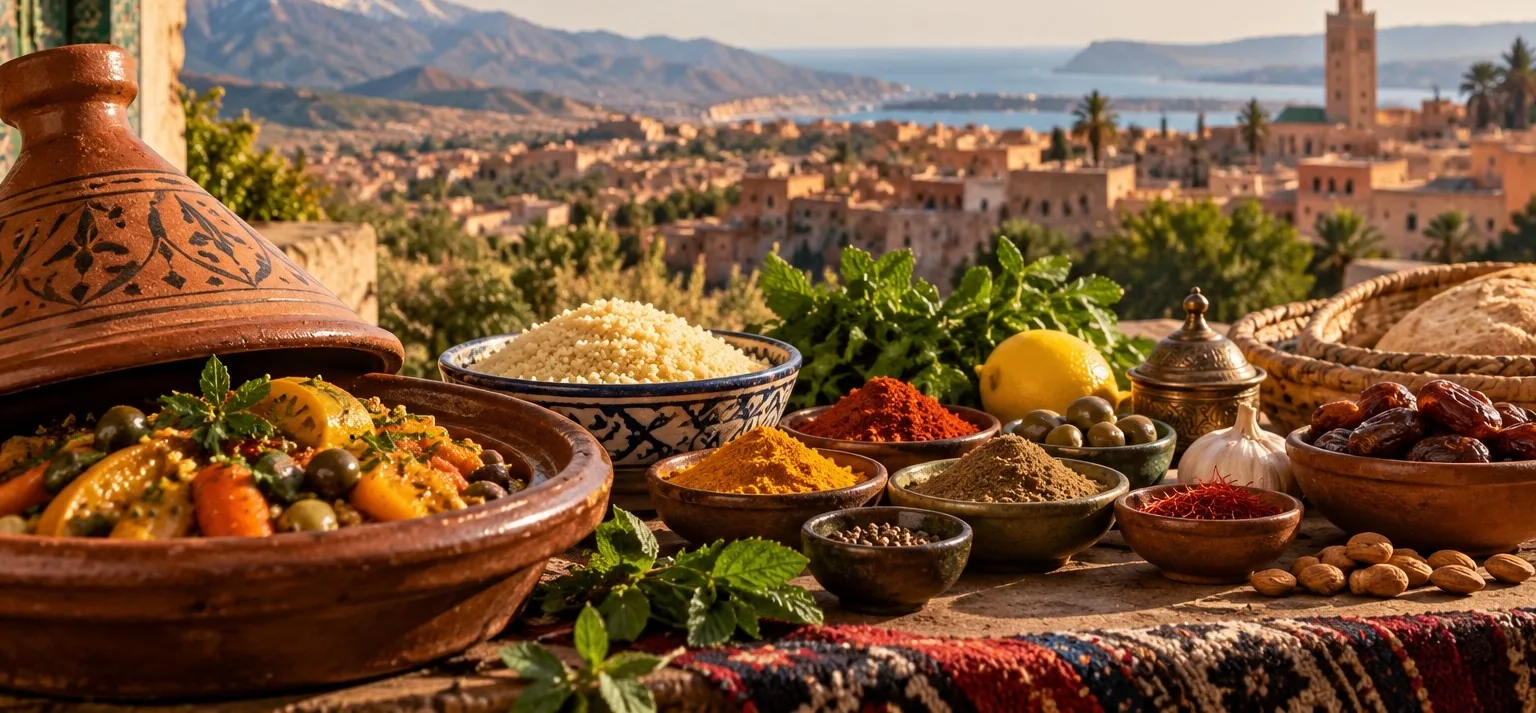
Moroccan cuisine did not begin in a single kitchen, city, or moment in history. It grew over centuries, shaped by the land itself and by the people who lived, traveled, traded, settled, and cooked across Morocco.
That is part of what makes it so distinctive today.
At its foundation are the food traditions of Morocco’s Indigenous Amazigh communities. Long before the arrival of later dynasties and cultural influences, everyday cooking was already deeply tied to grains, legumes, olives, olive oil, fruits, herbs, milk, and the rhythms of agriculture and pastoral life. Historical research on Moroccan gastronomy points to very old regional differences as well: olive oil, sheep’s milk and fresh fruit were more common in the north, while dried fruit, argan oil and goat’s milk were especially important in parts of the south. Archaeological finds at Volubilis also show how significant olive oil production was in Morocco in antiquity.
This connection to the land remains one of the deepest threads in Moroccan cooking. Ingredients matter. Seasonality matters. The quality of a vegetable, an herb, an olive, a piece of fruit or a cut of meat can change an entire dish.
Over time, Morocco became a meeting point of cultures.
Arab influence added new layers to the cuisine from the early Islamic period onward, contributing spices, new culinary techniques, and broader connections with the food cultures of the Middle East and the Mediterranean. Later, Andalusian influence became particularly important in cities such as Fez, Rabat, Meknes and Tétouan. It helped shape the refined balance of sweet and savory flavors that is still associated with Moroccan festive cooking today: meat with dried fruit, cinnamon with almonds, orange blossom water in pastry, and dishes where texture and aroma matter as much as richness.
This is one reason Moroccan cuisine is difficult to describe with a single flavor profile.
It can be earthy and simple. It can also be intricate and ceremonial.
It can be a pot of lentils or beans prepared for an ordinary day, or a pastilla built around layers of pastry, meat, spice, sweetness and crunch. It can be bread, olive oil and tea, or a couscous prepared for a large family gathering.
Moroccan Jewish communities also played an important role in the country’s culinary history. Jewish and Muslim families shared many ingredients, dishes and regional traditions, while Jewish dietary laws and holiday practices produced their own adaptations, preservation methods and festive specialties. Moroccan Jewish cooking developed in constant conversation with the wider cuisine around it, especially in cities and trading centers where communities lived side by side.
Sub-Saharan, Saharan, Mediterranean and other regional connections added still more layers. Morocco’s geography made that almost inevitable. The country sits between the Atlantic and the Mediterranean, close to Europe, connected historically to trans-Saharan trade routes, and home to mountains, fertile plains, coastal cities and desert regions. Each of those environments shaped what people grew, preserved, traded and cooked. Scholarly work on Moroccan gastronomy therefore describes its history as the result of Amazigh, Arab, Andalusian, Bedouin, Moorish, Jewish, Sub-Saharan and Ottoman influences rather than a single linear tradition.
But influence alone does not explain Moroccan cuisine.
What makes it Moroccan is what happened after those influences arrived.
They were absorbed, adapted and transformed locally.
Couscous is a good example. Today it is one of the most recognizable dishes of Morocco and the wider Maghreb, but there is no single Moroccan couscous. Families and regions prepare it differently. The vegetables change. The meats change. The seasoning changes. The occasion changes. Yet the deeper idea remains recognizable: a generous dish built to be shared.
The same is true of tagine.
“Tagine” refers both to the cooking vessel and to a family of slow-cooked dishes. Some are savory and deeply spiced. Others combine meat with prunes, apricots, quince, almonds or honey. Some are simple weekday dishes; others are prepared for guests or celebrations. The technique is old, but the expressions are almost endless.
And then there are the dishes that reveal Morocco’s taste for contrast.
Pastilla brings together crisp pastry, fragrant filling, spice, sweetness and savory richness. Harira combines tomatoes, legumes, herbs and spices into something both nourishing and ceremonial. Rfissa transforms bread, lentils, fenugreek and spiced chicken into a dish with a completely different identity from couscous or tagine. Moroccan pastries bring together almonds, sesame, honey, orange blossom water and delicate doughs in combinations that are often tied to holidays, weddings and hospitality.
Across all of these dishes, spices are important, but Moroccan food is not simply “spicy.”
The goal is usually balance rather than heat.
Cumin, ginger, turmeric, paprika, saffron, cinnamon, coriander and pepper may all appear in Moroccan cooking, but they are used to build layers of aroma. Sweetness may come from fruit or honey. Acidity may come from preserved lemon. Fresh herbs add brightness. Toasted nuts add texture. The result is often complex without being aggressive.
That balance is one of the key signatures of Moroccan cuisine.
Read more about what makes Moroccan cuisine unique.


